
Social Capitalist Ethics II: Social Justice and Platform Ethics
What would a platform ethics that is not anti-platform look like?

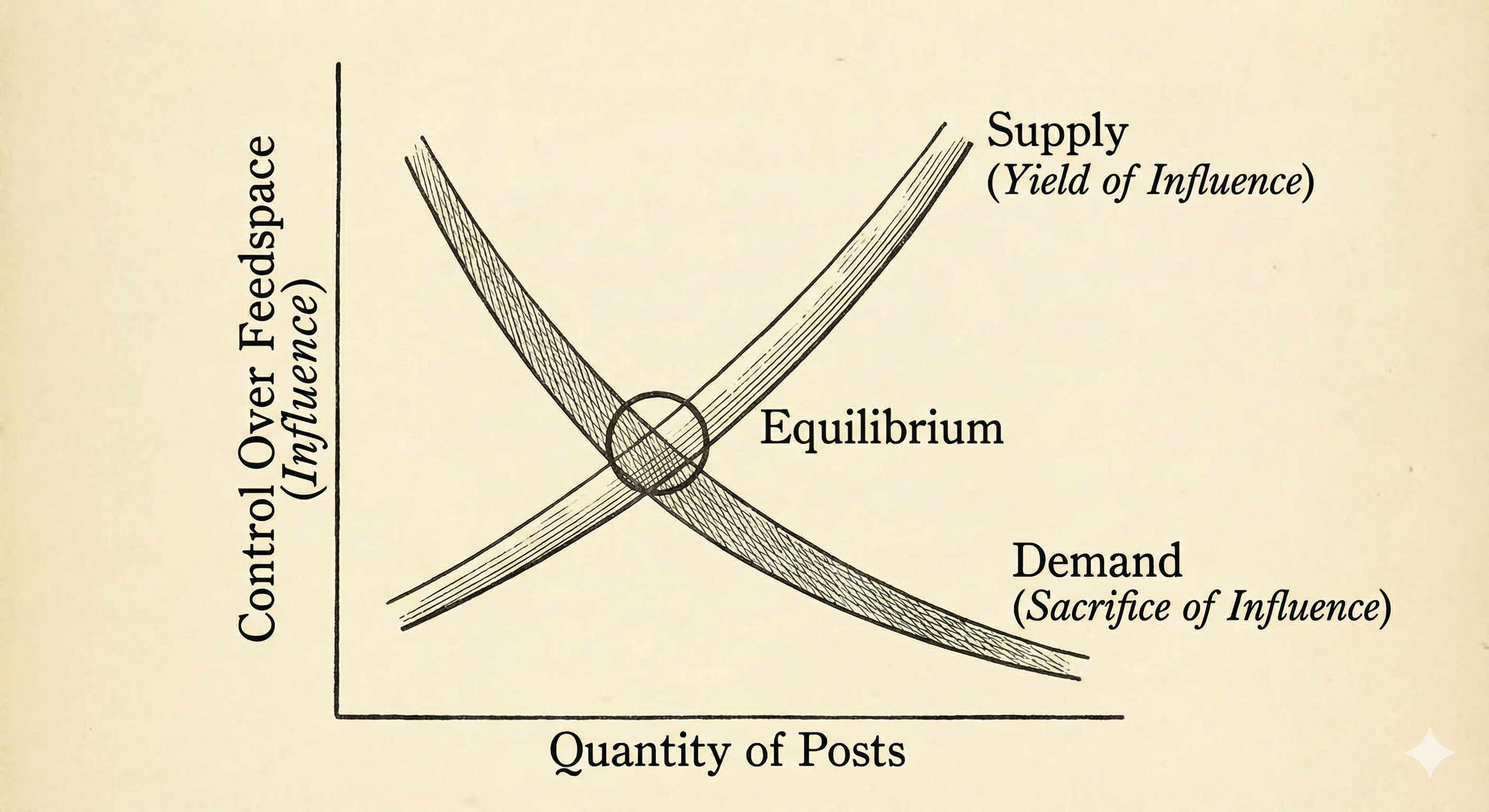
One of the central challenges in articulating a social capitalist ethics is that what is more commonly referred to as “platform ethics” can appear to be almost by definition anti-platform. Indeed, it is hard to read many of the authors I mentioned in my first post on the topic without concluding that to take an ethical view toward platforms is to wish that they would cease to exist. In this they again share something with much of business ethics, which also often can seem to be anti-business. In both cases it is instructive to clarify what the nature of the complaint consists in.
The market system depends on competition, and the key informational device is the price. Prices organize the division of labor by coordinating production and consumption. If there is a shortage of some commodity, buyers do not first determine the exact remaining stock and then negotiate a rationing scheme. They bid for it. Prices rise, and the higher price both rations demand and induces suppliers to increase production. A certain amount of competition is therefore baked into the system as a functional requirement for the price mechanism to work at all. Yes, this is Econ 101, but it can take you pretty far as a starting point for thinking about many problems.
A similar process operates under social capitalism on social media platforms. Here the central mechanism is access to, control over, and priority within feedspace. If some kind of content is undersupplied, users bid for that content by how they manage their accounts: they click through, watch longer, like, comment, follow, or deliberately seek out certain accounts, while scrolling past, muting, or blocking others. These actions reduce the space taken up by some things and enlarge the space for others. In turn, some producer accounts acquire entitlements to a greater share of more feeds in the future: their influence grows as more accounts owe them more access to their feeds. Platforms aggregate these patterns of engagement into metrics and recommendation rules, which reveal what sorts of content are currently winning the competition for influence.1

While calls for more user algorithmic control are common, this sort of influence bidding is already part of the common everyday practice of managing your social accounts. How many times have you discussed with somebody how much your feed got over-stuffed with some type of content, and the steps you took to reduce that, say, by purposely not clicking on that type or a certain account again, or looking at something else to elevate that.
For me, for example, I got myself inundated with curling content a few years ago when I took up the game. But there is only so much curling one can consume, and so my personal demand curve sloped down as my feed became saturated. I had given up too much access to my account to curling content creators, and I shifted some of that influence elsewhere. Now I’ve got far too much boxing, and I’m going to have to do something about that soon. I personally have a very high willingness to pay attention to Golden State Warriors content, and accordingly my account owes a great deal of space to pretty much every GSW content creator under the sun (Light Years baby!).
Content producers and aggregators for their part observe which posts and formats travel further and which fall flat, and they adjust their content creation accordingly. They don’t need to know why, any more than the proverbial Hayekian tin producer doesn’t need to know why the price of tin is rising. Those who move into areas where user bids of space in their feeds are strongest are rewarded with more control over that feedspace (in the form of metrics that entitle them to it), just as those who respond to high prices in a market gain greater access to the collective product of others.
Seen in this way, some ongoing competition among producers and among content types is likewise a functional requirement of the cloutist system. Without it, influence metrics would cease to track differences in audience interest. What I like to call “influence prices” would lose their discovery role.
If you want to imagine it in the form of a classic supply and demand graph, there is quantity of posts on the x axis and control over feedspace on the y axis, which is to say, influence. The law of demand says that the quantity of content consumed tends to decrease when more influence must be sacrificed (though this is not actually a law any more than is the law of demand, in that the relationship can reverse under certain scenarios); the law of supply says that the quantity of a type of content offered tends to increase when it yields greater influence.
A moral framework can be described as “anti-social capitalist” if it would prohibit actions that are functional requirements of a social capitalist system. Many of our central moral principles are clearly anti-social capitalist in this sense, just as they are in the case of economic capitalism. As Heath puts it in the economic case, there are
“no plausible formulations of the categorical imperative …or even the golden rule that permit price competition, because this sort of behaviour has a beggar-thy-neighbour quality that makes the underlying intention difficult to universalize…The hope, when lowering one’s asking price or raising one’s offer, is to gain an advantage over others, an advantage that is vitiated if they proceed to do unto you as you are doing unto them.”
The cloutist analogue is straightforward. When I optimise my posts, timing, and tone with the explicit aim of pushing other people’s content out of your feed and replacing it with my own, my intention is to gain an advantage over you. If you do that unto me, the advantage I seek disappears. In that sense, the point of the action is undermined if universalized. Neither the golden rule nor its Kantian generalization fits comfortably with this sort of influence competition.
Something similar is true for virtue-ethical views in the mode of Alisdair MacIntyre. Their central worry is the instrumentalization of social activity and relations. Instead of giving advice, making a joke, discussing politics, or writing a social theory essay for the internal goods of those practices, on a social capitalist social media platform, one does so to obtain external goods: a rising follower count, growing metrics, and the tokens of influence that successful content production yields. It is no wonder that a writer like my friend Antón Barba-Kay, working at the nexus of virtue and Marxian ethics, concludes that the life of virtue is no more compatible with the worship of Mammon, god of money, than with the worship of Narcissus, god of influence.2
There are also somewhat at least seemingly more moderate or mild moral frameworks, in which the problem is that social capitalism seems to permit actors to act in a highly partial way, with a view toward their own private interests. A platform can tweak its algorithms in ways that it thinks will maximize engagement, while throwing into disarray creators who had built their entire strategy around the content or marketing techniques encouraged by the previous influence allocation regime. Enjoyers of that content now have a harder time finding it. Legendary moments of upheaval on platforms revolve around such changes. Likewise, aggregators or influencers can cease to promote accounts they deem unworthy or unhelpful for their own growth.
These worries are not dissimilar in ethico-logical form to complaints about a factory closing a plant and moving to a new location. In both cases, there is a tendency to imagine that the manager (or account runners or platforms) should take a Solomonic view to balance the interests of all parties, such as platforms, user communities, creator communities, advertisers, or commentators. To the extent that one tries to institutionalize an equal claim by all parties on the influence generated by a post or account or even a collective, one quickly runs into the question of incentives. Creators take on genuine risks in producing content, not least to their own reputations and future clout. If creators were required to give up most of the potential gains in influence to others by design, it is not hard to imagine them becoming more cautious, and less likely to create at all.
This is one among many cases where spending some time reading what amount to trade publications among influencers and creators is helpful, similar to how students of money and finance such as Perry Mehrling built up their views about the plumbing of those systems in part by reading and analysing trade publications. Consider the following from a recent article on socialmediatoday.com, about Instagram adding a new reposting option to its stories function:
“And with only a small portion of users ever posting anything at all, keeping the credit flowing to creators is key to maximizing engagement…only 20% of creators ever post anything at all…and as people have moved away from public posting in recent years, in favor of private DM engagement, the number of people actually posting original content has continued to decline…Which is why IG needs to keep them happy. As noted, it’s already taken action to reduce the presence of aggregator accounts, in order to ensure they don’t steal credit, and re-posts is another element within this, providing more direct options to boost creator content.”
The language of “credit” is especially apt and telling. It reminds us that what circulates on platforms is not attention so much as influence, understood as claims on future feedspace that can be extended, boosted, and devalued.3
Similarly, if commenters would reliably and by right receive as much credit as a post’s creator (rather than have this occur as the rare ratio event), the quantity and variety of posts would almost certainly diminish greatly. Fully realizing the vision of equal recognition across all parties would likely require something like a socialist re-organization of platforms or a shift to public, cooperative, or non-profit infrastructures4
What these moral frameworks all share is the conviction (or implication) that an ethical world would be one in which social capitalism on platforms would not exist. To the extent that one is uncomfortable with the radical consequences of this view, personally, socially, and politically, there is another family of frameworks waiting on the other side of the passage. This is the Charybdis of “anything goes” platform libertarianism.
On this view, people can do whatever they like in the “marketplace of ideas” and the raucous “town square.” If everybody knows what they are getting into (“read the terms of service!”) and has a clear ability to exit (“if you don’t like it, delete the app”), then there is nothing to complain about. On stronger utilitarian versions, what appears immoral or at least rude and offensive is permitted if the gains are great enough. If manipulation or outrage maximizes engagement, that counts as a social benefit: satisfaction and utility have grown, preferences have been revealed.
This stance permits one to feel less moral disquiet at what occurs on platforms because it is a much more permissive normative theory. The cost of this quietude, however, is high: it is just as permissive regarding everyday morality. A strict form of libertarianism cannot be turned off when you turn off the app, and would be just as permissive with respect to life offline. It would imply the permissibility of a model of neighborhood and community not unlike a 4chan forum or a cancellation pile-on. If shunning, ostracizing, and surveilling one’s neighbors in the most ruthless way to produce some desirable outcome, that too would count as justified social conduct.

One can follow the line of thought further into various iterations of consequentialism, but the general issue is the same. This strategy dissolves a real and living tension that many of us feel between interaction in person and interaction online. When I talk to my neighbors, I am not looking through and past them to a metric that will not only rate my neighborliness but serve as a token for my standing in their minds the next time they think about whether we need a new stop sign on our street or the new city bike lanes are a good idea. When I get absorbed in the flow of a boxing sparring session, I am not plotting out how it is going to make for an awesome post that will boost my subscriber count. I am immersed in the practice for the purpose of the practice. It is quite another thing to stage the session to advance my standing as a boxing influencer, or to stoke my vanity with a bunch of hearts and likes. Those might be a second order outcome, but it is not my first order goal, and the transposition of the second into the first does not leave the first unaffected.
But we do such things at which our better selves would blush anyway, and often feel bad about it. An adequate social capitalist ethics should not pretend that this tension does not exist. It should explain why obligations and permissions shift between domains, and how far that shift can go before it becomes indefensible.
Given the extent of disagreement across these various moral frameworks, a bit of humility may be warranted before outlining very thick ethical commitments upon which the world should purportedly be remade. An alternative path is in the tradition of sociologically informed ethical theories that highlight the conditions of functioning institutions, and the rules that no participant in such institutions could reasonably reject, given what the system is for and what it accomplishes. Classic authors in this tradition include Habermas, Parsons, Durkheim, Pareto, and Rawls.
The market failure approach to business ethics is built on a core of some of the less controversial aspects of Rawlsian theory, joined with ideas about efficiency (in the economist’s sense of Pareto efficiency, not the sense of taking the shortest path to a given goal), supplemented with a dash of Parsonian-Durkheimian-Habermasian structural-functionalism. The central insight is that society is a cooperative venture for mutual advantage. Cooperation generates both benefits and harms and does not arise spontaneously from individual interest. We need rules and institutions to structure cooperation and manage free riders.
That basic logic holds not only in the economic domain. Each of us gains socially from others, in the form of information, support, humour and entertainment, worthy competition, recognition, and more. People cluster and connect not only for the material or economic benefits but for the social benefits, such as companionship, recognition, distinction, or serendipitous encounter. Access to more people provides more opportunities to share in those social goods.
This clustering also creates harms, insofar as some receive far less recognition than others, some can become victims of opprobrium and shunning, not to mention the potential to monopolize opinion or free-ride on the creations of others. A familiar example of the latter is the class school group project in which one member allows others to do most of the work, then shares equally in the praise thereafter (but easily avoids the blame). Or think of a band, where the charismatic front person garners most of the attention, even when the drummer or bassist wrote the songs.
In a social circle, there is usually someone who consistently draws on the group for emotional support but rarely reciprocates. They benefit from norms of care they make little effort to sustain. And most of us have encountered the friend who attends every dinner, enjoys the hospitality and conversation, yet never hosts in return. These cases are not moral catastrophes -- though the spurned academic whose achievements were usurped by another has been known to nurse a grudge for quite a long time. But they show how commonplace worries about skimming off the social surplus unfairly can be, and how quickly people start to feel they have a legitimate complaint when others do so.
A host of informal and formal rules and conventions regulate how we generate and distribute the social benefits of sociality. In general, we have an interest in maximizing the benefits. It is better to have more and greater varieties of social enjoyment, companionship, support, information, and affirmation. It would be good if more people could have others care about what they do and think, and vice versa. Recognition is a primary social good, it depends on solidarity – people who care about one another -- and more of both is better. And yet, some outcomes leave some with more influence than others, or with access to their preferred types of enjoyment, companionship, instruction, and so forth.
As a result, there arise conflicts, jealousies, envies, grudges, resentments, and complaints. Modern contractarian theory can be understood as an effort to provide a theory of the conditions under which we can minimize the number of people would have grounds for complaint. Pareto efficiency is simply the thinnest way of formulating that idea, and this is why it has come to play such a strong role as a diagnostic method.
In the context of social capitalism, Pareto efficiency could be formulated as follows: if it is possible to change platform rules so that some people receive more recognition or better content without making anyone else worse off, then the current rules are Pareto inefficient. Things could have been better, but they aren’t. This means both that those who could have received more content or recognition have reasonable grounds for complaint, and that if they did increase their social benefits, there would be no grounds for any new complaints to arise.
These conditions are often difficult to meet. Sometimes increasing one type of content means that some parties enjoy less of what they want, or more of what they don’t want. Sometimes if one person gains influence, that means somebody else cannot, or even has their influence diminished and their reputations tarnished. Status is often thought of in zero-sum terms5, so that if you think of my thoughts first, it means you are thinking of his thoughts second. This can seem to make complaint a feature of the human condition.
This tendency toward complaint is one of the reasons why smaller scale and traditional social norms favor equality, so that all are expected to give and receive the same. In this scenario, if one deviates from equality, the other can complain: they should not receive more influence than me. Each of us should be paid attention to the exact same amount. If you receive more than me, I can demand to switch places: let’s watch my favorite movie or show next week. This solution is not immune to varieties of self-serving complaining, such as when I demand that my family watch my favorite TV show this week in the name of equity, even though nobody else likes it. Even so, we can often neutralize complaints if we neutralize the impulse to switch places and operating under a presumption of equality is often an effective way to do this.
These considerations highlight the powerful role that efficiency and equality tend to play in evaluating the ethical character of any given set of institutional rules. To the extent that a set of rules can increase efficiency and maintain equality, it is more likely to minimize complaining. In the ideal case, we would have both. Everybody takes on the same burdens, and everybody receives the same benefits. This would be equal and efficient.
However, equality and efficiency do not always align. One major reason for this is that the benefits an institution allocates do not fall from heaven; somebody must produce them, and that is not easy. The size of the surplus depends on what we put in: how much effort people contribute, how much temptation to free ride they resist, how much risk they are willing to take on, how much time and attention they devote to others. If everyone insists on strict equality of recognition or reward, some people will be less inclined to contribute in the first place. Some people are willing to do more of the work of sustaining friendships and neighborhoods – hosting, checking in, organizing, circulating around a party and keeping the conversations flowing while minimizing conflict – if they expect a bit more praise in return, and maybe a bigger say in community affairs in the future.
In other words, the classic equality–efficiency tradeoff exists in the social as well as the economic domain. Sometimes arrangements that deviate from equality make everyone better off, because they create stronger incentives to take on the burdens of social creation. Imagine a neighbor who reliably hosts gatherings, introduces people who would not otherwise meet, and keeps track of who might help whom: parents looking for babysitters, older residents who need their snow shovelled, someone hoping to find a good piano teacher. Or think of the friend who always organizes the group chat, books restaurants, and keeps plans from falling apart. Over time, those people tend to receive more than an equal share of social rewards. The neighbor might get a local “citizen of the year” prize, be the first to be invited to new events, the first to be consulted about neighbourhood initiatives (including by local politicians; they may even become a local politician eventually), and the first contact for new businesses trying to reach the community. The friend often gets disproportionate say over what the group does, simply because they are the one who gets things to happen at all.
There is clear inequality here, in attention and influence. Yet the rest of the neighbourhood and the rest of the group also gain. This is because the overall level of coordination, mutual help, and social enjoyment is much higher than it would be without those hubs.
If, in situations like these, we tried to enforce equality by insisting that all households host the same number of events, or by discouraging people from going “through” the neighborhood leader and demanding that every new opportunity be announced to everyone at once, we would probably flatten that inequality. Likewise, if we insisted that everyone take identical turns organizing weekend plans, or treated it as unfair that the friend who does all the planning work has more influence over what the group does, we might succeed in making things more equal. We would also almost certainly get fewer gatherings, less information sharing, more evenings where nothing happens because nobody stepped up, and a thinner social life. The point is not that all inequality is good, but that some inequalities in recognition and influence can be justified when they raise the floor for everyone else in the form of a richer social life and perhaps even more opportunities for recognition for all than would have otherwise been present.
How much the floor must be raised to justify a particular deviation from equality is a difficult question. Rawls’ theory of justice is in fact a very strict and somewhat extreme answer to the question. On one influential reading, no gain to the better-off can justify any arrangement in which the worst-off end up worse than they could have been under some alternative set of rules. On this view, you could not justify giving the neighborhood connector any extra invitations or letting the planner-friend have more say over what the group does if, in any way at all, it left the quieter, less central neighbours or friends even slightly worse off than they would be under a perfectly equal scheme.
Less demanding views instead incorporate the idea that the intensity of a complaint should matter in our assessment of a given arrangement. Very large deviations from equality tend to generate more intense and understandable resentment, so if those deviations are to be justified, the gains had better be correspondingly large. It is one thing if the neighborhood connector or planner-friend gets a bit more informal authority in exchange for doing a lot of invisible coordinating work; it is another if a tiny handful of people end up monopolizing all the invitations and all the say (leaving no room for anybody else to enter the scene), or even abuse the latter to push their own partial views over the community as a whole. Put more technically, a reasonable set of rules for a social platform – whether a neighbourhood or a social media service – should increase the social benefits of its users as much as possible, should care about how those benefits are distributed, and should be somewhat biased toward equality, all else equal.
Within this broadly institutional theory of platform justice, specifying the challenge posed by platforms becomes a bit more straightforward. The central problem is that social media platforms, like markets do in the economic sphere, prioritize social efficiency over social equality far more than many other institutions, and they draw vastly more people into that prioritization than ever before. They do so systematically and by design. The rewards to a viral content creator are exponentially higher than anything the neighbourhood connector or planner-friend could ever achieve: a single clip can produce millions of views, sponsorship offers, and a substantial boost in public influence, while most other accounts remain effectively invisible. Two people might make equally thoughtful commentary, or put in similar hours of work, but one catches the algorithm or the collective mood at the right moment (or has a larger account) and is catapulted into a different universe of influence, while the other continues to speak into the void. Such lack of visibility may be experienced as a kind of social death: your thoughts have no standing in the minds of others.
Many of the resulting distributions of content and influence are strikingly indifferent to moral claims that seem, in ordinary life, to matter. Creators who spend weeks working on a video can be eclipsed overnight by others who simply package the same ideas in a more clickable form; those most affected by an issue can find their voices drowned out by commentators who are better at driving outrage; people who consistently support others in comment threads may never receive anything like the recognition gained by someone whose post goes viral once, who pay for algorithmic boosts, or participate in various forms of engagement farming.
Most of all, some amount of inequality seems to occur by rule. Platforms do not generally require anyone to care about how influence is distributed and adjust their behavior accordingly (though of course doing so can well become an account or platform’s brand; this too is a competitive strategy). The operative norm is simple: make content that produces engagement and influence, and let the chips fall where they may.
I will close by returning briefly to some of the other moral frameworks mentioned above. Antón’s Marxian–MacIntyrean critique, for example, depends on a much thicker set of moral assumptions. It condemns the pursuit of glory, celebrity, fame, renown, or influence in much the same way as moralists condemn the pursuit of material over spiritual satisfaction. This is another way of expressing a very real sentiment: many people find it hard to admire a life devoted to making money or chasing likes, and often describe it as producing a kind of emptiness at the center of one’s existence.
Chris Hayes’ adaptation of the Marxian critique of worker alienation is similar, and all it takes is a bit of time on influencer forums to see the phenomenon in action. Spending hours at a restaurant to get the perfect shot for the Gram usually leaves your dinner cold. Worse, the brutality of the platform is that it can make you experience something as central as enjoying a meal with friends as a burden imposed by the insatiable demand for content.
There is something attractive about this style of argument, and I myself have been drawn to it at times. But there are good reasons to avoid it, even if it is an effective way to gain praise from, and influence over, those who already agree with you. For one thing, lots of people do not seem to mind the quest for fame and influence. Yet even many of those who are perfectly comfortable with that quest still worry about it operating on a fair playing field, that is, about the balance between efficiency and equality.
For another, the thicker critiques are rarely extended consistently to other institutions. For example, Antón wishes that more of technology could become bureaucratized into the “text-based or number-crunching tasks that are the necessary evils of optimizing any modern economy.” Yet working in a bureaucracy is often considered to be rather alienating, whether in big corporations or the state. Other critics who wish to make platforms state-run are essentially shifting the location of alienation from one type of institution to another.
The result is a general grievance at the modern condition as a whole, rather than the more specific question about why it would (if it does) make sense to allow for more scope for deviations from equality in some institutions (such as markets and platforms) than others (such as government services).
The thinner perspective also allows us to distinguish between problems that might be endemic to and caused by platforms rather than those that might only be enhanced by them. For example, the instrumentalization of social life is not unique to platforms. Kierkegaard had this in mind in his famous discussion of the aesthetic in Either/Or. The aesthete is the type of person who forms friendships or romantic relationships or goes on trips to write a poem or novel about the experience, not for the experience itself.
Any system that allows people to produce “content” for others to enjoy would be subject to some form of aestheticism. Kierkegaard wrote well before Facebook existed! Platforms amplify this aestheticism, but they do something more specific as well. They are built around competition for clout, and there is no guarantee that the resulting distributions of attention and influence will be fair. That is a much more specific issue, and a proper topic for a specific social capitalist ethics.
In a way, this brings us back around to Antón’s statement that there is some place for “optimizing any modern economy.” We may read this as an admission that one can only take the lament with modernity so far. Vast amounts of information, entertainment, instruction, commiseration, recognition, organization, discussion, and activism simply would not occur without something like the infrastructures that platforms provide. It is tempting to follow the economist’s intuition that all of this is justified whenever the efficiency gains are large enough.
Still, this is not self-evident. Our reliance on clout tournaments on platforms to deliver social goods is no more self-evident than our reliance on markets to deliver economic goods. There are many ways of organizing the production and distribution of content and recognition that maintain far more direct social control: tightly knit face-to-face communities, literary and artistic worlds governed by strong editorial gatekeepers, national broadcasters with explicit public mandates, or, at the extreme, “China’s massive system of internet thought control.”
In terms of a market failures perspective, to justify capitalism it is not enough to point to the gains from trade. One also must explain why we have chosen institutional arrangements that relinquish a great deal of direct social control over the distribution of material reward. By the same token, if social capitalism is to be justified, we need a detailed account of why it can be acceptable to let algorithmic and engagement dynamics, rather than more direct political or social control, play such a large role in allocating influence and driving content production, as well of which ethical and institutional limits have to be in place for that to be defensible.
Subsequent posts will provide this justification.
Yes, I know this is not “neutral” or natural and depends in large measure on platform regulations! The same goes for markets. We will return to this issue, as it is central to social capitalist as well as economic capitalist ethics. But before entering into the question, it is crucial to understand the basic market failure that social capitalist platforms solve, since that solving that problem determines the point of the platform, which in turn determines the legitimate constraints it operates under and which should guide considerations of the internal ethics of platform governance.
Here is how Antón puts it: “Our consumption of virtual choices is the very picture of alienation, particularly to the extent that it infiltrates our self- understanding, identities, and self- regard. The malaise around attention is one emergent feature of this larger alienation from good work. Marx denounced the nineteenth- century factory floor as intrinsically alienating. Much of our doom-scrolling experience—on social media in particular—is no less dehumanizing than the assembly line. The latter degraded people through physical drudgery, while the former enthralls our minds, scratching the glandular itches that digital products themselves create. To suggest that social media can become salutary under different ownership or with better legislation is like suggesting that Louis Vuitton bags could be used to tote potatoes around in a socialist collective: it’s only very technically true. So long as the appeal of digital services consists of the quantified reification of identity and the provision of anxious satisfactions, it will continue to obscure questions about the quality of our material lives. We should work to cut these services down or out entirely.”
It also complicates claims in the literature about the basic nature of platforms. For example, Nieborg and colleagues’ “two-sided market” framing foregrounds an asymmetry in which advertisers are the money side, while users and creators are subsidized. But the excerpt above points to a second, distinct and interacting asymmetry. In influence terms, advertisers are not the privileged paying side so much as the influence-consuming side, subsidized not in money but in feedspace. They purchase access to a stock of future attention-routing capacity that is capitalized elsewhere, above all through the ongoing pledges of audiences to the platform (a stream of future feedspace the platform can draw on) and the extension of production credit by creators (claims on future distribution the platform may or may not honor). This does not negate the two-sided story about money, but it adds another layer to the distinctive platform power in the issuer’s control over influence settlement.
One could also imagine a variant of a luck egalitarian critique. On this conception, virality is essentially random, and so nobody is entitled to the influence “earnings” that come from luck. Eugene Wei made a similar point in highlighting the huge followings that some early Twitter accounts received by being automatically included in the standard lists of potential accounts to follow that new accounts were offered on startup, many years later. A strict luck egalitarian could say that a popular account expecting more influence than a less popular one is like a man expecting to be paid more than a woman purely on the basis of gender. This strong version of luck egalitarianism would clearly put an end to the platform system as a whole, in that it would treat almost all influence allocated through virality and path dependence as morally undeserved. As in the case of applications of luck egalitarianism to economics, it would seem to require massive levels of surveillance and control, and very intimate knowledge of individual histories, to determine what exactly and authentically comes from the agent rather than from luck.
Though as we will see in later posts, the rise of social capitalism requires a serious revision of this view.
I refuse to have anything to do with Bluesky even if I had time for it and if Sports Bluesky was a viable thing AFAIK but back when Twitter was viable for Dan Drezner and he had enormous clout and quality as these things go he would take month-long sabbaticals because Twitter was making him meaner and dumber than he ever wanted to be. That is someone who is a viable public intellectual. Broad generalist middlebrow environments could sometimes allow public intellectuals to find audiences who did not already completely agree with them and get these audiences interested in comparatively arcane topics but if clout is about validating how people feel especially about video streams that they have seen the whole marketplace of ideas suffers even off-screen.