
Are we amphibians?
Neo-Hegelian and Pragmatist images of culture

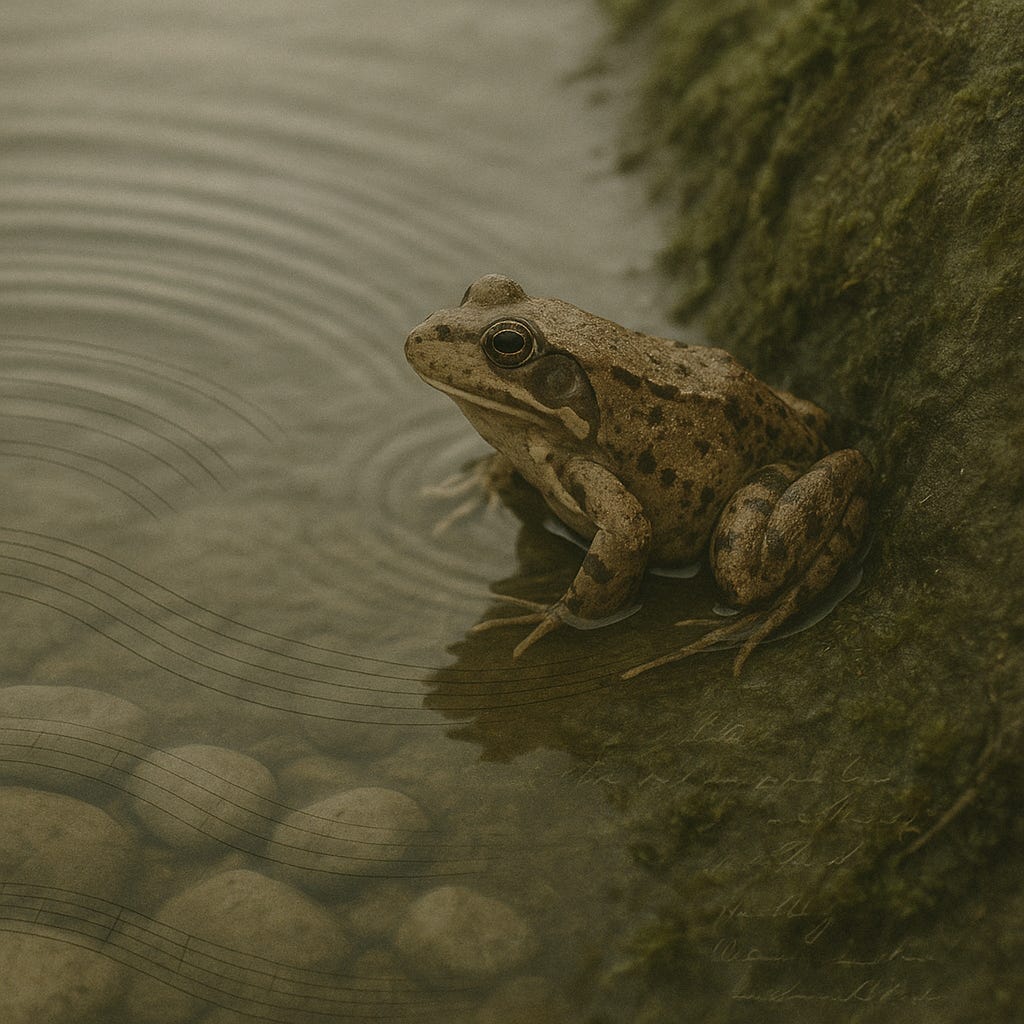
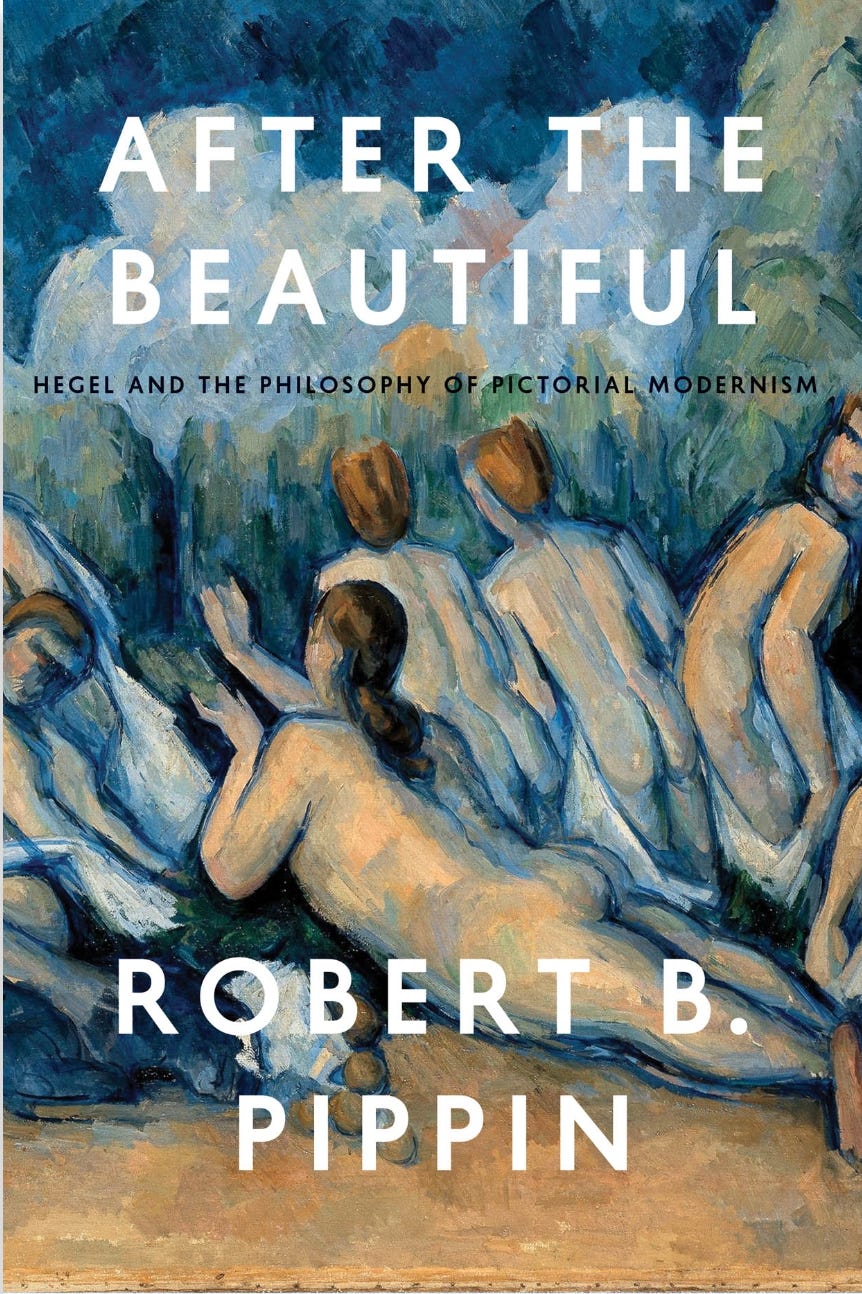
One of Robert Pippin’s favorite Hegel quotes in his recent writings about art features a metaphor. In it, humans are like amphibians, standing between what in non Hegel-ese would probably be called nature and culture. I don’t have the Hegel quote in front of me to verify what the Hegel terms are, but if they mean anything, it is that.1
The metaphor is to indicate that the practice of making and appreciating art cannot be divorced from the sensuous, affective, material dimensions of our experience. The Idea must be embodied, and that is what art does: the sensuous actualization of the idea. The tricky thing is that this is not supposed to mean that the idea pre-exists the actualization in sensuous material form. Rather, it is in the practice of making and appreciating the actual material works of art, responding to them, experimenting with them, seeking to say something in them, that the possibilities of expressing and reflecting on who we are are developed.
The amphibian metaphor is supposed to indicate that we can’t escape an existence in both domains, and it is our lot to move between them.
But is this metaphor really that telling? What if we take it very seriously? An amphibian like a salamander moves between two regions on the earth’s surface. While there are many differences between land and sea, the key one is that the organs that allow an animal to extract oxygen from water won’t work for air. So prior to the evolution of amphibians, they were essentially two mutually exclusive domains (other than some plants?). You either lived in water or lived in land.
Amphibians evolved through natural selection producing hybrid lung-gills (look it up!) that enabled them to move freely between the two worlds. This created a new set of evolutionary pathways, which in turn enabled the evolution of lungs and land-based animals who, eventually, lost the ability to survive in the oceans.
Is this a good metaphor for the relationship between nature and culture? Or, before coming to a judgment, what image of the relationship between nature and culture does it depict?
First, it seems natural to equate nature with the ocean and culture with the land, in that culture/land is the thing toward which the evolutionary process is moving, the end or meaning it realizes.
Second, the land and ocean are two regions on the Earth’s surface, with fairly distinct (if at times fuzzy) boundaries, so that in the metaphor moving from nature into culture is like exiting one region and then entering into a different region (exiting nature and entering culture is like emerging from the sea).
Third, amphibians are transitional organisms in a phylogenetic tree. Looking back, we now know that they evolve into land-based reptiles and mammals. The metaphor implies a kind of evolutionary dynamic whereby it is at least possible to imagine leaving the sea behind entirely, to exist completely in the realm of culture.
Fourth, amphibians are able to move back and forth between land and sea because of certain evolved capacities that other animals lack. The metaphor implies that humans have some capacities that enable them to move between nature and culture, and that whatever those are could evolve into something else.
There are some aspects of this imagery I find kind of weird. The most striking is the idea of nature and culture as regions in space that you can move back and forth between or exist at the borders of, and that, because of this image, you could theoretically step completely outside of nature. That seems very Hegelian in the bad old sense: a picture that tends toward the purely ideational, with a strong teleological thrust away from the sensuous. Just saying “but we’ll never get there” doesn’t take that aspect away from the structure of the imagery.
Why is that weird? Consider an alternative, broadly pragmatist (Deweyan) version: culture is not a region but a practical capacity. It develops potentials that are there already in the lowest life forms, e.g. the capacity to respond to the environment, move towards good things and away from bad things, store and communicate and interpret information, anticipate responses from others and eventually oneself.
Humanity develops all of this beyond what had been hitherto possible, realizing existing capacities and creating platforms for new ones. This all happens by manipulating and experimenting upon material objects – of course it does, what else could it do? Through those experiments, we learn new ways to express ourselves, actualize ourselves, and circulate those conceptions among others, and in doing so they take on additional potentials and meanings we might not have initially imagined.
None of this involves rising up out of the sea and entering into a different region, or any kind of teleological direction toward that more heavenly or better domain of pure culture. Nor does it involve any sense of loss of that either, or a corresondong loss of access to the lower or past or rudimentary region. There are no regions! There aren’t two spaces, but richer ways of living in the exact same one.
The metaphor of two regions, with an amphibian moving between, in the end retains a kind of Platonism, of the bad kind, and just reverses it into a kind of disappointed variation – we are stuck as amphibians.
The “solution” is not to make us fish or fowl, but to reject the entire image.
No I’m not gonna ask Chat but if you think the specific terms matter for this discussion, let me know!
I think your take is correct. To say that human culture is a separate domain from nature is like saying the social structures of insects are a separate domain from nature. Which I guess you could do, if you really wanted, but you probably shouldn't!
What might work is... the domain mathematical objects? If you are prepared to grant to mathematics some objective existence, then you could say that it exists in a domain that really separate from, yet somehow related to, nature. And when we do math, or maybe generally do theorizing of some suitably rigorous sort, you might say we are trying to move our existence into that mathematical domain.